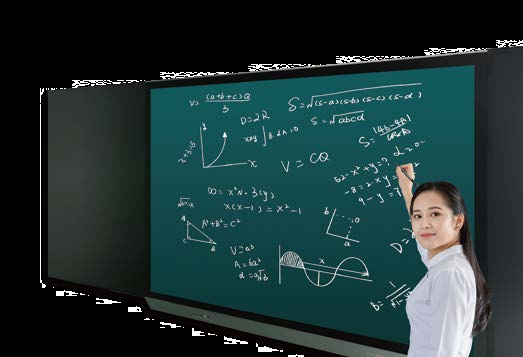
Look around modern classroom today, and you'll see that digital tools aren't sitting in the corner anymore—they're running the show. Take those interactive displays, they act more like mission control for the whole class, pulling together interaction, group work, and smart insights into one spot. They're seriously shaking up how teachers teach and how students learn.
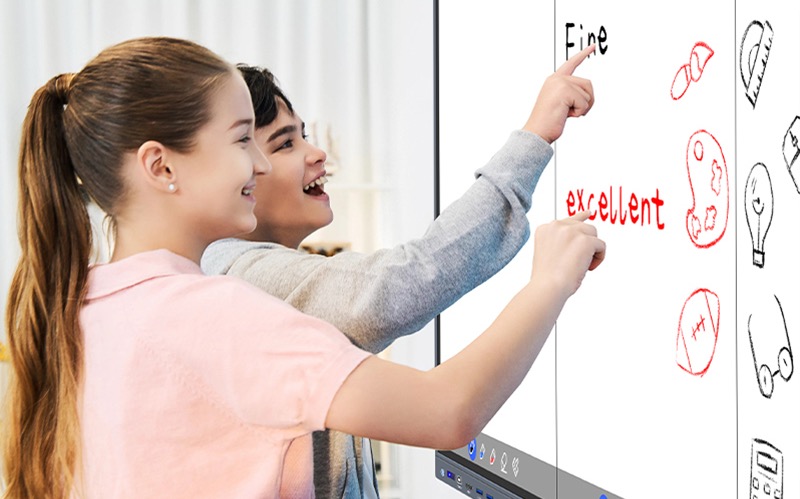
Let's face it—holding the attention of every single student has never been easy. Interactive displays take that challenge by turning learning into something you do with your hands. The kids are calling the shots, they can reach out, grab a DNA model and twist it around, sketch out mountain ranges right on a moving tectonic plate, or run a virtual chemistry lab with a few touches. When complicated theories become things you can actually manipulate, something just connects in the brain. Students move from being an audience to being explorers, and that naturally lights a fire of curiosity under them.
And it's way more than just watching something on a screen—it's learning with your whole body. Students are tapping, sliding, handwriting, and getting that immediate "ping" or visual change as feedback. Picture a history lesson: a student swipes across a timeline, and up pops a video clip of the event, a primary source letter, and a map showing the movement of people. That kind of multi-layered experience makes information memorable in a way that a textbook paragraph often isn't.
Everyone talks about collaboration skills being crucial, interactive displays achieve this. You can have a bunch of students all around the screen, working at the same time. They could be piecing together a timeline of historical events as a team or building a simple coding project together. While they're at it, they're learning the nuts and bolts of teamwork—how to debate a point, assign tasks, and find a middle ground. It's real-world practice built right into the school day.
Then, showing off their work is completely painless. With just a couple of taps, the mind map their group brainstormed, the digital story they built, or the results of their group experiment is front and center for everyone. Having such a smooth, polished way to present their ideas does amazing things for a student's willingness to speak up and sharpens the whole class's ability to give and receive feedback.
For educators, this technology brings a richer and more diverse range of teaching tools and materials. In the classroom, teachers can flexibly utilize and integrate various media and resources. For example, a teacher can smoothly transition from explaining an original historical document to playing a related video, and then guide students to operate on an online collaborative platform. This seamless integration of various resources helps to create a deeper connection between subject knowledge and students, thereby creating a highly focused and interactive learning environment.
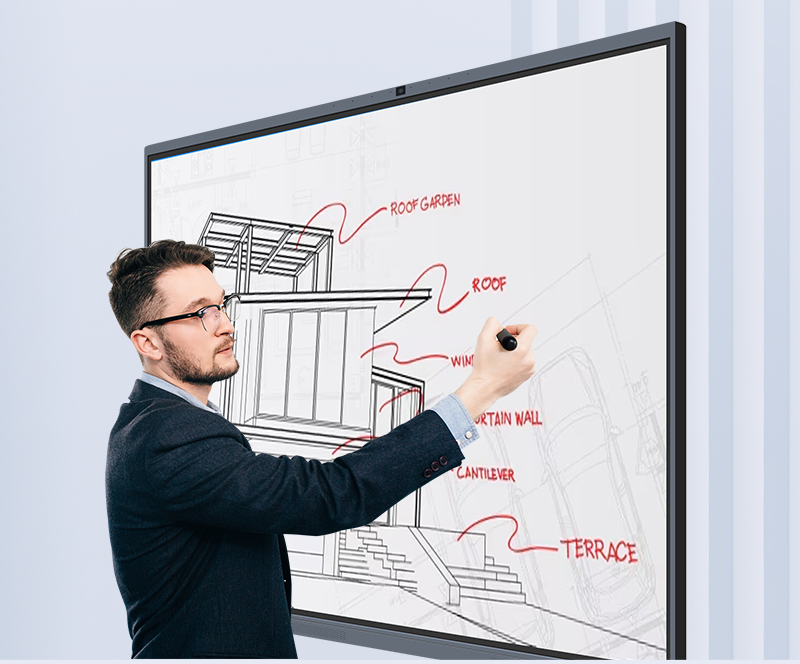
Real-time annotation is an exceptionally useful feature. Teachers can directly write, draw, or highlight key information on anything displayed on the screen. Whether analyzing the structure of a poem, deriving a complex scientific formula step by step, or interpreting geographical features on a map in detail, real-time annotation allows teachers to visually demonstrate their thought processes. This opens a clear window for students, allowing them to observe and understand the specific methods and approaches of analysis, reasoning, and problem-solving in real time.
A central goal for teachers is to meet students at their respective points of understanding. Interactive displays serve as a practical and effective means to support this aim. They facilitate responsive, or adaptive, instruction. By using instant polling or formative assessment tools, a teacher can gauge student comprehension and adjust the pacing or explanation in the moment if needed.
Furthermore, these displays can accommodate differentiated tasks within the same classroom space. Different sections of the screen can be used for distinct group activities concurrently. One group might interact with an enrichment activity, while another accesses guided practice or review materials. This structure allows each student to work at an appropriate level of difficulty, focusing on tasks that are suitably challenging for their individual progress.
At the end of the day, interactive displays represent more than just swapping out old gear for new tech. They point to a fundamental shift in our approach to education. We're moving from a model where the teacher is the sole source of knowledge to one where the classroom is a hub for student interaction, teamwork, and discovery. The room transforms into an intelligent, connected environment where concepts become vivid, ideas get traded and improved, and each learner can carve out their own path. When teachers master this tool, they're doing much more than getting through the lesson plan—they're nurturing the kind of agile, inquisitive, and cooperative thinkers the world is going to need tomorrow.