On the podium, the teacher casually draws a parabola, which the smart education whiteboard instantly transforms into a standard shape; at key points, it retrieves cloud-stored courseware from prestigious universities; students complete exercises, and their answers are displayed in real-time on the large screen. This is the transformation taking place in classrooms today. Say goodbye to one-way instruction and embrace two-way interaction—when artificial intelligence meets interactive whiteboards, the traditional lectern is undergoing a profound transformation. The blackboard remains the same, but its meaning is completely different.
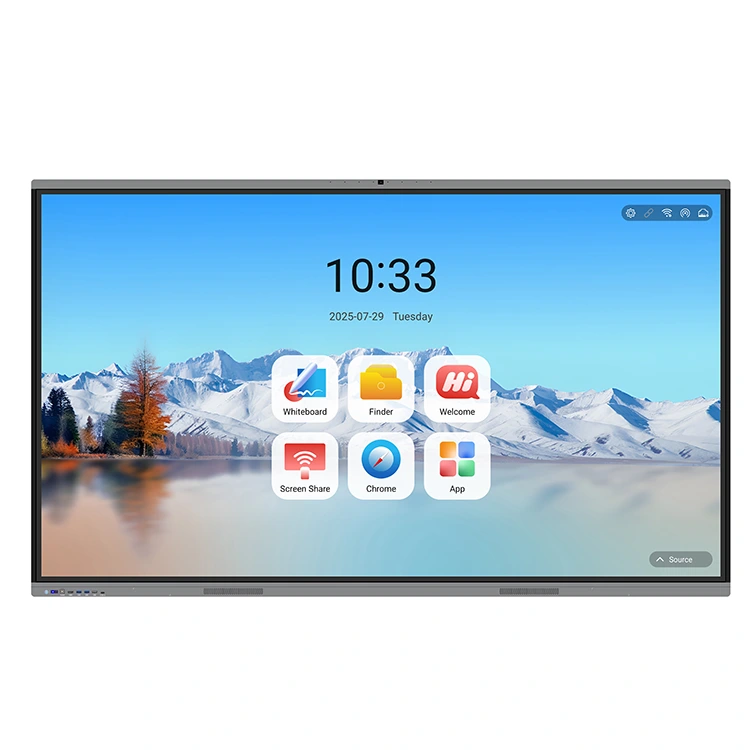
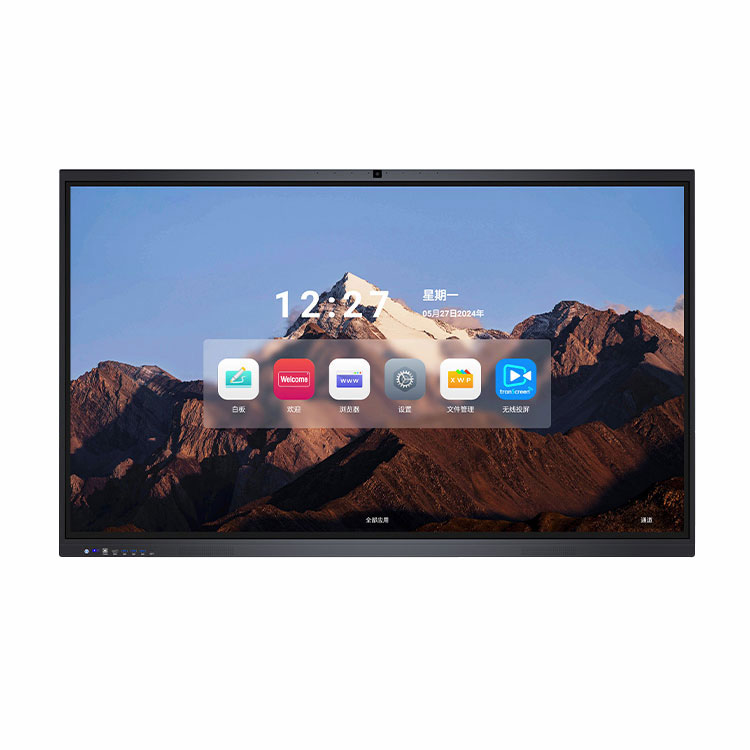
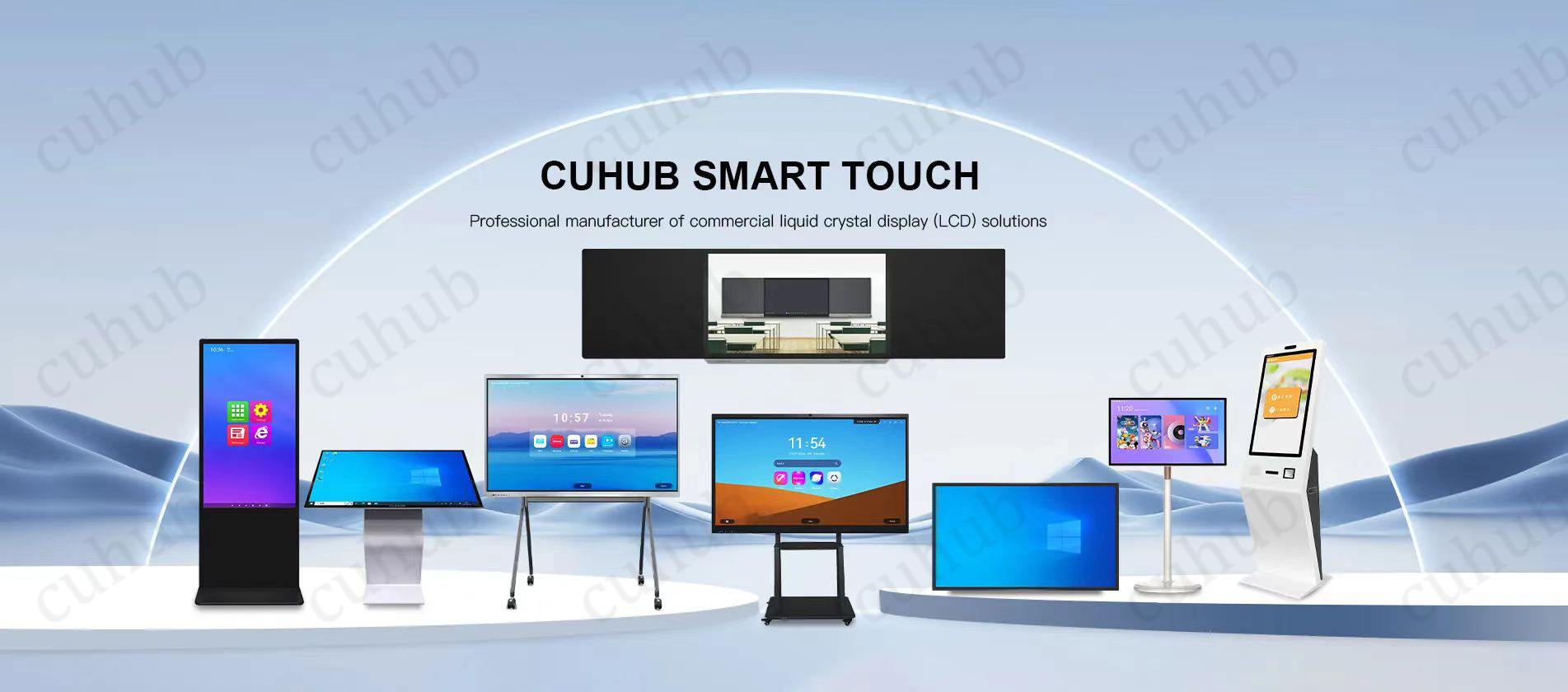
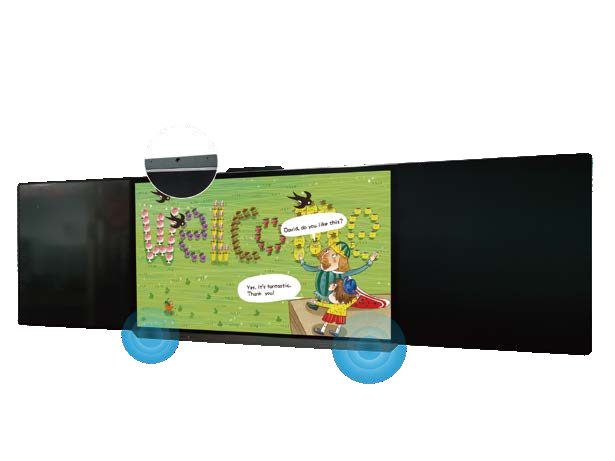
The smart whiteboard integrates advanced technology into the traditional learning environment, equipped with a high-resolution touchscreen that supports interactive teaching and collaborative learning. Built-in note-taking, multimedia presentation, and video conferencing software makes it compatible with various educational tools and resources, making it an ideal choice for the modern classroom. In terms of hardware configuration, the smart education whiteboard achieves zero-gap touch control, supports 20/40-point low-touch operation, and allows multiple people to write simultaneously. Equipped with a high-definition AI camera and an 8-array microphone with a 10-meter effective range, it offers adjustable brightness options from 350-700 cd/m², supports both Android and Windows systems, and features a customizable interface to fully meet diverse teaching needs.
The "draft" feel of traditional blackboard writing has always been a minor problem in teaching. Students find it time-consuming and laborious to decipher quickly drawn diagrams and formulas, and notes are prone to errors.
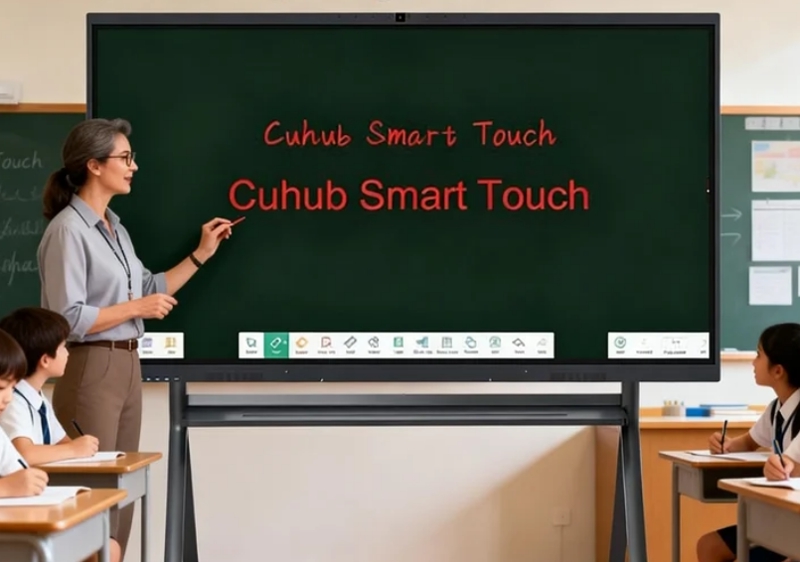
The AI recognition function of the smart education whiteboard solves this pain point. Teachers can write and draw freely on the board, and the system automatically recognizes the content characteristics: hand-drawn circles become standard circles, randomly drawn straight lines are automatically straightened, and chemical structural formulas become neat and clear. More importantly, handwritten text can be converted into printed text in real time, and complex mathematical formulas can be converted into standardized formats with one click.
The value of this technology lies in the fact that teachers retain the freedom and coherence of their writing on the blackboard, while students receive a clear and neat presentation of knowledge. Blackboard writing is no longer just "understandable," but becomes a precise carrier of knowledge.
Previously, teaching resources for a single lesson were limited to textbooks, teaching materials, and a few slides prepared by the teacher. When supplementary explanations were needed, the available materials often limited their scope.
With the smart education whiteboard connected to the cloud, the boundaries of teaching resources have been broken down. Teachers log into their personal accounts, and previously accumulated lesson plans, courseware, and exercises are automatically synchronized. If a specific video or knowledge point is needed in class, it can be directly searched and retrieved on the whiteboard. School resource libraries, regional shared resources, and the national smart education platform are all seamlessly integrated. In a survey of teachers, 83.3% had mastered the basic functions of the smart whiteboard, but more importantly, cloud connectivity significantly improved teachers' lesson preparation efficiency.
Teachers can open courseware prepared in the office with a single click in the classroom, and the whiteboard notes and annotations generated during class are automatically saved and uploaded. Resources are no longer confined to a single device but are truly "on the go."
Feedback in traditional classrooms is often delayed—it's only after homework is graded that it's discovered a student hasn't grasped a certain concept. By then, the best opportunity for correction has passed.
Smart whiteboard makes classroom feedback "real-time." Students answer questions using tablets or answer devices, and the entire class's performance is immediately displayed in statistical charts: accuracy rates, which options were frequently wrong, and who hasn't finished—all clearly visible. Teachers can see the data immediately and determine whether a particular concept needs to be re-explained.
Interactive formats are also more diverse. Student work can be projected onto the screen with a single click, typical errors can be anonymously commented on, and group discussion results are uploaded and compared in real time. The classroom transforms from a teacher's "one-person lecture" into a "two-way dialogue" between teachers and students, where every student's understanding is visible.
Technological advancements ultimately aim to return to the essence of education. The introduction of smart education whiteboard into the classroom is not about replacing teachers with cool technology, but about freeing them from tedious tasks so they can focus more on genuine teaching—observing, understanding, and guiding students.
Currently, over 2,000 schools nationwide have implemented intelligent classroom feedback systems, generating over 150,000 intelligent classroom feedback reports. In a pilot application covering more than 100 districts and counties, 84.3% of teachers believed that AI helps innovate teaching models and inspire student thinking. It brings knowledge to life and activates thought. When a whiteboard possesses AI capabilities, it is no longer just a whiteboard. It can be a historical map, a chemistry lab, a scene recreation from a literary work, or anything a teacher desires it to be.
Using AI interactive whiteboards to create the smart classroom of the future is not a distant vision, but a reality that is already unfolding. In more and more schools, teachers and students are experiencing this new teaching method together, feeling the real changes that technology brings to the classroom.