Healthcare moves fast, and with that speed comes a real challenge: ensuring patients understand their care while keeping daily operations on track. As hospitals and clinics continue to adopt digital tools, interactive flat panel displays are emerging as a practical solution—helping translate complex medical information into something patients can easily grasp, while also streamlining workflows for staff.
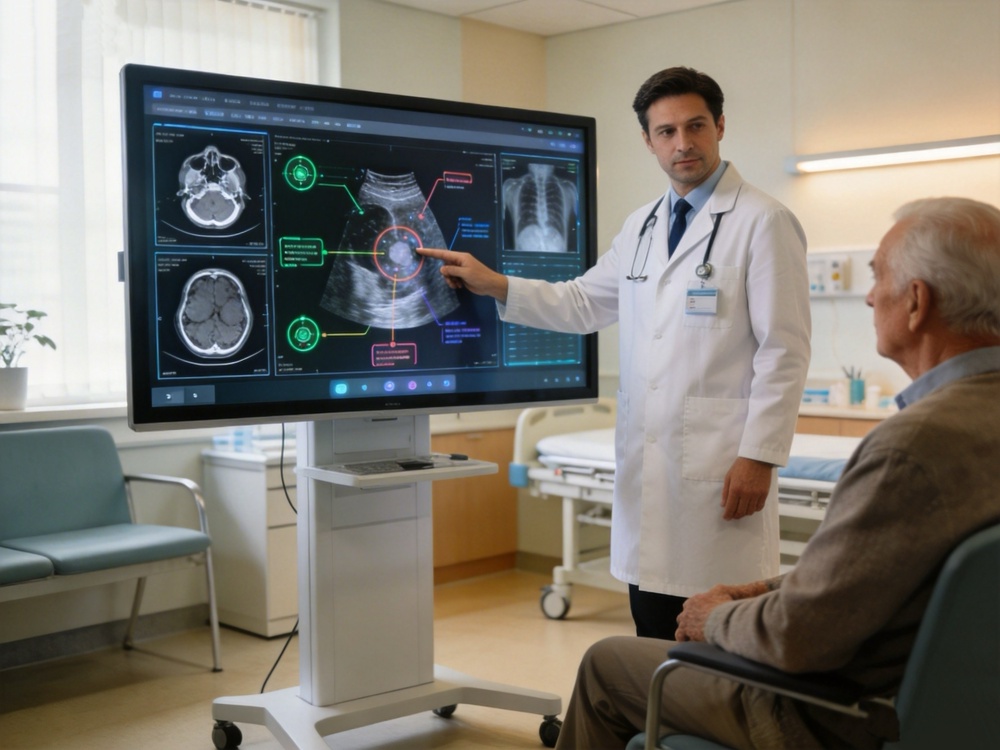
Every doctor and nurse knows how it goes—explaining a condition, walking through treatment options, going over next steps. It takes time. But even after all that, patients often leave confused. Paper charts, printed handouts, verbal instructions—they only go so far. Studies show that people forget nearly half of what their doctor tells them before they even get to the parking lot.
And that matters beyond satisfaction scores. Patients who actually understand their diagnosis and what comes next are far more likely to take their medications, make the lifestyle changes their care depends on, and stay engaged in their own recovery.
Making Medical Information Clearer
Interactive flat panel displays are changing the way clinicians and patients communicate by turning dense information into something visual and easy to follow:
Interactive flat panel displays aren't just for patient education—they're helping staff work smarter. Nurse stations replace the juggling of paper charts and phone calls with centralized screens showing patient statuses, medication schedules, and alerts all in one place, so nurses can prioritize tasks quickly and respond faster when patients need attention. In operating rooms, surgeons can access patient imaging, vital signs, and surgical plans without leaving the sterile field, using touch and voice controls to navigate information without touching non-sterile surfaces. Team collaboration becomes more efficient when specialists from different departments can look at the same imaging together, annotate in real-time, and reach decisions faster without scheduling separate meetings to review scans. Training also speeds up—new hires learn procedures through interactive demonstrations rather than shadowing for days, making on boarding more consistent and getting staff up to speed faster.
Hospitals and clinics that have brought in interactive displays are seeing measurable changes:
These aren't theoretical upsides. They're real-world improvements—ones that affect both the bottom line and, more importantly, how well patients do after they leave.
If you're exploring interactive displays for your facility, here's what to look for:
Ready to see how interactive flat panel displays could work in your space? Schedule a consultation and we’ll: